
Joel Arun Sursas’s Take on Healthcare Cyber Security: How to Protect Patient’s Privacy

Originally published on compulearntech.com

When working in the medical industry, protecting your patient’s data is not just ethical – it is required by law. With HIPAA in place, medical professionals must be conscientious about keeping close tabs on patient information and only giving health data to those approved to receive it. Here, medical doctor and health informatician Joel Arun Sursas shares tips for protecting patient privacy in the digital age.

Encourage Security Measures with All Employees

While it may be obvious to physicians what falls under HIPAA compliance, it may not be apparent to those who work as office assistants or medical secretaries. This is why it is critical to take a very proactive approach to ensure everyone in the practice is up to date on HIPAA guidelines and regulations.
 

This includes having all employees checking documents multiple times before sending any emails or handing over paperwork to ensure verifications are accurate and that the data is going to the right person. Also, not allowing employees to speak about non-essential healthcare data over the phone or to anyone outside the clinic will ensure nothing slips[1].

Give Patients Access to Their Data

Having an online portal or Robotic Process Automation self-service system can cut down on information being sent around, which, in turn, cuts down on information going to the wrong place. Think about it: when you send multiple emails each day with health information or make numerous calls, it is easy to get a wire crossed and send the wrong data to the wrong person.

Dr. Joel Arun Sursas believes that with Robotic Process Automation, human error can be removed from the equation, allowing the automated or partially automated system to make the data delivery. This reduces the risk of data misdelivery and frees up time for other essential tasks that cannot be automated under current systems.

If patients are placed in a position to access their records through a similarly automated system, there is an even lower risk. If possible, giving direct access[2]through a portal account is one of the best ways to make sensitive information available without placing full responsibility on a staff member who may make a mistake.

Understand HIPAA But Do Not Fear It

Ensuring that staff understand HIPAA and consider it a beneficial tool to a clinic is the first step towards creating an environment without data slippage. HIPAA is not meant to be a thumb on your neck, so to speak, but instead, a measure of accountability to ensure patients are receiving confidential care as needed and are able to access medical care without fear of exposure or shame.

Fearing HIPAA does nothing but make it harder to serve patients. It is not a thing to be afraid of, but a thing to embrace. If you comply with it, HIPAA can be a fantastic tool. It is just a matter of making an effort to ensure your entire staff is educated and prepared to face what being HIPAA compliant requires[3].

There are a lot of things you can do to protect your patient’s privacy. From working on an automated system to make connecting easier than ever before without room for human error or just understanding what being HIPAA compliant actually entails, there is always something to help keep your patient’s critical data private and secure.

About Joel Arun Sursas:

Joel Arun Sursas holds a Bachelor’s Degree in Medicine and Bachelor’s Degree in Surgery from the National University of Singapore and is continuing his education to obtain a Certificate in Safety, Quality, Informatics and Leadership from the Harvard Medical School, and Masters in Applied Health Science Informatics from the Johns Hopkins University (both expected in 2020). His technical skills include SPSS, RevMan, and Python. Dr. Joel Arun Sursas’ most recent engagement is with a medical device start-up company Biorithm where he serves as Head of Clinical Affairs, working to take fetal surveillance out of the hospital and into the home, revolutionizing the obstetric practice globally.

References

1. Lo, Bernard, et al. “HIPAA and Patient Care.” Jama, vol. 293, no. 14, 2005, p. 1766., doi:10.1001/jama.293.14.1766.

2.“HIPAA Turns 10: Analyzing the Past, Present, and Future Impact by Daniel J. Solove :: SSRN.” Search ELibrary :: SSRN, https://papers.ssrn.com/sol3/papers.cfm?abstract_id=2245022. Accessed 23 Sept. 2020.

3.“Psychiatry Online.” Psychiatry Online, https://ps.psychiatryonline.org/doi/full/10.1176/appi.ps.55.5.575. Accessed 23 Sept. 2020.
Can These Handy Android Apps Help You Save Time at the Doctor’s Office? Health Informatician Dr. Joel Arun Sursas Answers

Originally published on educationviews.org

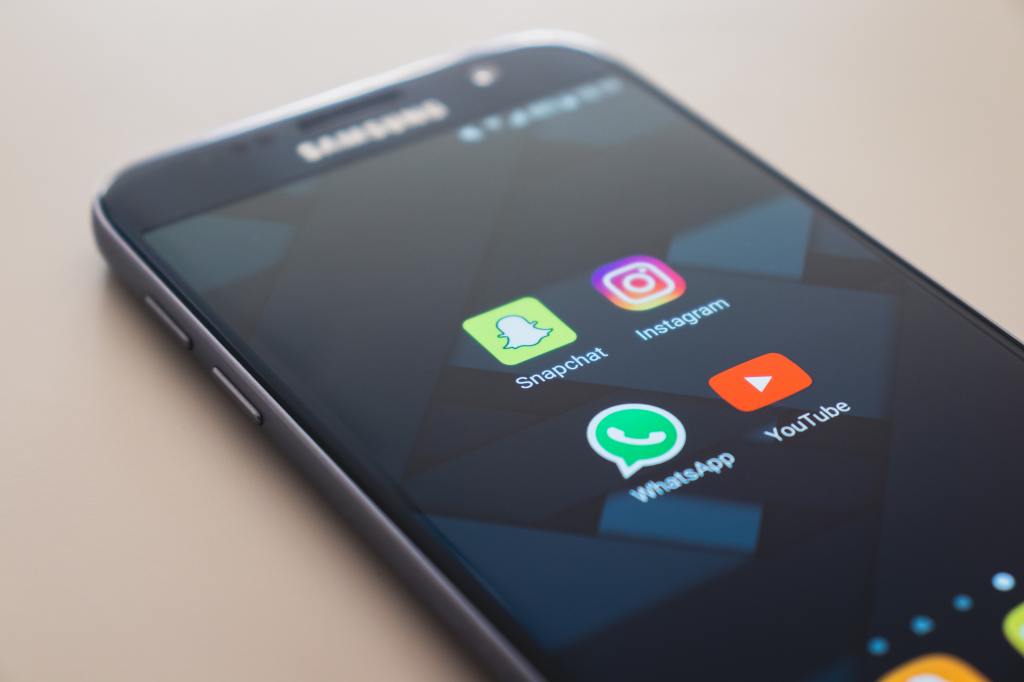
Today, there are many apps available that help individuals save time when visiting their physician or pharmacist. Some apps let a patient use their smartphone to transmit and manage prescription histories, make pharmaceutical requests, text questions to physicians, schedule telemedicine consultations, and maintain their entire medical history via their mobile device. The speed and connectivity of mobile technology are transforming a wide variety of professions; here, health informatician Dr. Joel Arun Sursas highlights handy Android apps that can assist in that mobilization.

My Medical

Anytime you are at your doctor’s office, pharmacy, or need to access any part of your medical history anywhere, this app will manage your entire medical record. My Medical acts as a single storage point on your phone or tablet for your medical records and other personal medical information. A single download allows you to keep multiple family members’ medical information on your device.

The app also stores your health insurance information, contact information for all of your doctors and treatment facilities, and your emergency contact information. It saves images of x-rays, lab reports, photos, and any additional files in a single location. The data is not maintained in the cloud or an external server; instead, it is contained on your Android device and password-protected. The app can receive records by email that should be added to your record in real-time [1]. My Medical costs $4.99 and is regularly updated and maintained by the designer.

GoodRx

Often the first task after leaving a doctor’s office is to get a prescription filled. Medicine costs comprise a very complex pricing system, and the difference in prices at the pharmacy can be substantial. Many pharmacies and drug companies offer store and manufacturer discounts, but these can be difficult to locate. Before you leave the doctor’s office, this app can help you find the best price and discounts in your area, and you can proceed directly to the dispensary with the best options. The app searches for the best price and coupons and saves searches for prescriptions you routinely purchase. To use this app, show your display to your pharmacist with your prescription, and the available discounts will automatically be applied. [2] GoodRx is free to download at the Google Play Store.

LiveHealth Online

This app is a telemedicine service that schedules a video call consultation with a doctor for medical treatment and prescriptions where allowed. Telemedicine is an excellent option for someone in need of a fast consultation for a matter that may not require an office visit. Doctors are generally available around the clock, so if time is of the essence, telemedicine can help you get quick answers. The service accepts many forms of health insurance, and you will only have a copayment for a regular consultation if your plan is accepted. If your insurance is not accepted, there is a flat $49 fee for a regular consultation. In any event, you will be notified of the full price for the services you choose before any charges are made. [3] The app is free to download at the Google Play Store.

About Dr. Joel Arun Sursas

Dr. Joel Arun Sursas is a Medical Doctor and Health Informatician who designs and implements the latest technological developments to solve administrative problems in healthcare. His primary focus is on developing technological advances between doctors and engineers to improve patient outcomes through improved monitoring while protecting patient privacy. Dr. Sursas’s interest in the field of Medical Informatics emerged when he began working as a Project Officer for PACES — the Patient Care Enhancement System for Singapore Armed Forces (SAF). At the SAF, he worked with multiple doctors and engineers on the largest Electronic Medical Record (EMR) system in Singapore and also developed a data analytics platform to assess epidemiological data throughout the system. Dr. Sursas is currently serving as Head of Clinical Affairs for Biorithm, a medical device start-up company working to move fetal surveillance from hospitals into home settings, revolutionizing the obstetric practice globally.

References

  1. appPicker, My Medical app review: a comprehensive record-keeping tool for your personal medical information, April 28, 2014, Retrieved from https://www.apppicker.com/reviews/14716/my-medical-app-review-a-comprehensive-record-keeping-tool-for-your-personal-medical-information
  2. Clark, 10 Things to Know Before You Use GoodRx, March 13, 2020, Retrieved from https://clark.com/health-health-care/good-rx/
  3. eCounseling, Livehealth Online Review, May 12, 2020, Retrieved from https://www.e-counseling.com/online-therapy/livehealth-online-review/

Health Informatician, Joel Arun Sursas, on the Implementation of Technological Support Important for Optimizing Clinical Management of the COVID-19 Pandemic

Originally published on amolife.com

Within a few hectic months, healthcare providers around the world have faced unprecedented challenges in infrastructure and patient care due to the COVID-19 outbreak. The novel coronavirus was first identified in December 2019 in Wuhan, China, but has since spread to over 150 countries . Despite initial efforts to contain the spread of infectious illness, the World Health Organization (WHO) declared a pandemic on March 11, 2020 . Soon afterward, the United States proclaimed a national emergency in response to the evolving crisis . As of today, it’s apparent that the pandemic is testing the limits of healthcare infrastructure on a global, national, and local level.

A steady increase in infections and deaths has forced healthcare organizations to adapt and pivot to electronic health records (EHR) and Telehealth (aka Telemedicine) to meet clinical demands. In a technical guidance policy recently released by the WHO to help strengthen health systems, Telemedicine was highlighted as an essential clinical service and clinical decision support . The modifications implemented thus far by healthcare providers such as UC San Diego Health include EHR based rapid screening processes, laboratory testing, clinical decision support, reporting tools, and patient-facing technology .

Ramping up the technological infrastructure to ensure safe and efficient testing measures as well as real-time and reliable communications is a daunting task. Success, in a short amount of time, requires the medical community’s innovative collaboration and perseverance on a scale that has never before been seen. Few understand the scope of this hurdle better than Health Informaticians like Joel ArunSursas. Health informatics utilizes information technology to organize and analyze health records to improve healthcare outcomes .

In this article, Joel ArunSursas reviews how EHR and Telemedicine capabilities optimize the clinical management of the COVID-19 pandemic.

EHR Based Rapid Screening Processes

EHR is a digital version of a patient’s medical chart and works in conjunction with various Telemedicine resources . In principle, EHRs enable doctors and medical support teams to access patients’ medical information wherever and whenever they require care . The tech is capable of real-time transmission tracking, mass information distribution, hosting digital meetings for day-to-day operations as well as Telemedicine platforms .

Shortages in reliable COVID-19 test kits inspired healthcare providers and their IT teams to develop an EHR based accelerated screening process . The system consists of telephone calls, direct email, and EHR messages to reduce in-person communication. Coupled with standardized templates consisting of pre-approved screening questions, physicians can confidently diagnose patients and identify which individuals warrant additional testing.

Due to obvious time constraints, health facilities lacked the luxury of quality control for the new screening process. Still, the end-product is the result of prioritizing the needs of the healthcare workforce who administer patient care. Even in desperate scenarios, it’s possible to define scope, timelines, budgets, and deploy EHR resources and standardize processes rapidly.

Laboratory Testing

As of April 10, the WHO reported approximately 900,000 confirmed cases of the virus . Certain countries, such as Germany and South Korea that adopted mass testing procedures in the early days of the outbreak, have maintained a better grasp on the virus . Whereas in America, testing facilities were limited and struggled to scale.

But as hospitals and third-party laboratories ramp up their testing resources, tech is playing an instrumental role. Pre-registration via telephone or an online portal allows patients to schedule an appointment at a designated testing site, thus reducing in-person interaction and potential exposure. Drive through coronavirus testing, although not available everywhere, has been an effective method to test patients who are suspect of infection while adhering to the social distancing guidelines provided by the WHO and CDC .

Clinical Decision Support

Clinical decision support systems (CDSS) are computer-based programs that analyze data within EHRs to provide prompts and reminders to assist health care providers in implementing evidence-based clinical guidelines at the point of care . Over the last three months, EHR vendors have augmented their existing systems to give users access to relevant data and information to cope with the crisis . Recent amendments and additions to systems include screening criteria, educational resources on test kits, protective equipment protocols, as well as approximate test result turnaround time. There has also been a demand to require and document the testing criteria met by the patient.

Athenahealth, a health IT vendor, is continuously updating software to align with CDC best practice recommendations . Its interactive decision tool within a clinical mobile app is of particular note. In less than 60 seconds, clinicians can access the CDC’s authoritative guidance to help diagnose and treat COVID-19 patients .

Reporting Tools

Custom reporting and analysis tools that are easily accessible by key personnel can help streamline patient care management. Relevant report topics and real-time data include testing capacity, isolation procedures, number of tested patients, test results, ICU vacancy, inventory (e.g., number of ventilator units), as well as the volume of Telehealth services.

The company Epic maintains a clinical records system utilized by a significant portion of American health organizations and encourages providers to share pertinent information via its interoperability network. Clinicians can use Epic’s suite of analytical tools to evaluate and compare data across different communities . The collaborative analysis may provide insight into effective treatment methods and help identify potential virus hotspots.

Patient-facing Technology

The United States government temporarily eased its Telehealth requirements, and medical institutions have seized the opportunity via remote triaging.

Patient portals allow individuals to schedule appointments, send secure messages to the care team, view and download test results, and connect with their primary care physician through video conferencing.

EHR and associated technologies can help mitigate the substantial strain on health systems worldwide . Once integrated, it can maintain the quality of healthcare, even improve it in certain circumstances, reduce the number of in-person visits, and subsequently reduce transmission and infection rates.

About Joel ArunSursas:

Joel ArunSursas is a Medical Doctor and Health Informatician motivated to solve administrative problems in healthcare. His determination to work tirelessly to bridge the gap between doctors and engineers is resulting in medical technology solutions that improve patient outcomes, enhance monitoring, and protect patient privacy. Dr. Joel ArunSursas is an effective communicator who facilitates the achievement of team goals.

Joel Arun Sursas Discusses Telemedicine: Is it as Effective as Usual Care?​

Originally published on social-matic.com

Telemedicine is a set of communication tools used by patients who are isolated from their physicians by distance or time and lack of access to health care services of all types, including for chronic condition management. As telemedicine bypasses the need for providers and patients to meet in person, its main advantage lies in creating opportunities for different types of provider-patient interactions that do not require traditional in-person visits. In this article, Dr. Joel Arun Sursas looks at whether telemedicine is as effective as traditional in-person care.

Practical Conflicts Between Telemedicine and Usual Care

The increasing use of telephone and other communication technology for telemedicine treatment is undergoing continuing scrutiny by insurance managers, Medicare administrators, and other entities responsible for monitoring and controlling medical costs. It is still typically required that services that have normally been handled by in-person contact between physicians and patients continue to be delivered that way in order to be covered. [1]

While some telemedicine applications have been understood to not involve ordinary patient interaction, such as teleradiology and telepathology, technological advances in communications are calling for more study and analysis of the effectiveness of modern telemedicine techniques, both as to patient outcomes and overall cost reductions.

Efficiency Advantages of Telemedicine

Greater Access to Healthcare For Patients

Almost every group of patients can point to a set of limitations on their ability to effectively manage in-person medical treatment. Some patients live in remote areas and have difficulty traveling to and from their doctor’s office regularly. Others are homebound under most circumstances and find the travel to their doctor’s office very difficult or unsafe. Almost all working patients find it difficult to take time away from work to visit their doctor. As technology improves and patients generally find conferencing and online medical management software more accessible, telemedicine will greatly reduce the challenges and stress involved in accessing healthcare. [2]

Cost Savings Through Advanced Communication Technology

Telemedicine availability significantly reduces the huge expense of non-essential ER treatment and ambulance-based transportation for many types of normal and non-emergency treatment. Cloud-based data analysis and monitoring services that can access patients remotely have the potential to greatly reduce ordinary healthcare treatment costs. Providers can also approach telemedical techniques to reduce overhead and can explore the possibility of working from home during set parts of their workweeks. [2]

Stronger Patient Engagement and Better Patient Outcomes

Patients who are given the opportunity to engage in telemedicine treatments are likely to keep more appointments and use the available technology to stay more involved in their day-to-day treatment. Patients are able to use telemedical platforms to ask more questions and provide important diagnostic information to providers faster and more directly. Patients find treatment options are provided more quickly and have been shown to suffer less stress and anxiety about their treatment plans when telemedical treatment is available. [1]

Greater Access To Specialists and Enhanced Referrals

Patients who live in rural and remote areas find traditional care by specialists to be especially difficult. Many patients might enjoy shorter commutes and wait times for certain types of specialist appointments related to specific diseases and chronic condition treatments. Treating physicians are also very likely to enjoy the opportunity to broaden their choices when referring patients to preferred specialists located in other parts of the country. [2]

Efficiency Disadvantages of Telemedicine

Hardware, Software, and Training Requirements

Telemedicine involves the expense of purchasing and implementing hardware and software systems that are not used in typical treatment settings. Staff training and possibly new staff hiring is also part of telemedicine implementation. After the initial startup expenses are absorbed, however, overall staffing requirements are likely to decrease, as individual nurses and doctors will be able to monitor more patients from a single location more effectively. [2]

Reduced Care Continuity Compared to In-Person Treatment

Some larger telemedicine systems will contemplate the assignment of random providers for some highly on-demand services. The difficulty in obtaining records quickly for on-demand services and other continuity issues can negatively affect treatment processes and outcomes. Additionally, the lack of regular in-person consultations can affect the overall experience of patients who prefer face-to-face consultations even when a physical exam is not necessary. [1]

Developmental Delays in Coverage and Reimbursement Rules

It is a virtual certainty that technology will always develop more quickly than administrative and regulatory processes that are expected to adapt accordingly. Healthcare providers will always need to take caution to ensure that they are exercising best practices when working with new telemedical advances and that they are working in ways that their services will be covered and reimbursed by insurance and governmental providers.

As the world of medical treatment continues to battle budgetary constraints and cost containment, the demand by patients and providers alike for telemedical advances will continue to increase. The interaction of developing technologies and systemic changes in healthcare delivery will increase the need for comprehensive studies of the effectiveness of telemedicine and the very likely unanticipated changes in how technology affects patient needs.